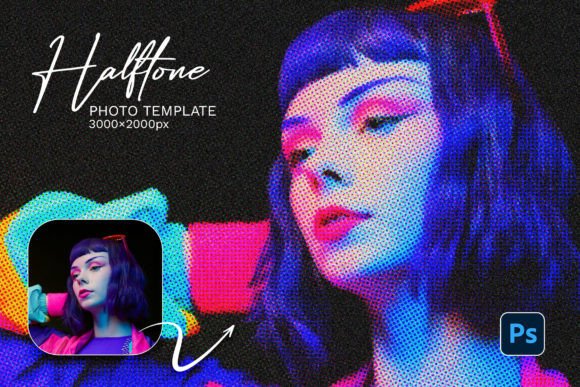
Unlocking Depth: How to Use Halftone Photo Template
There is a specific kind of visual energy that comes from the analog era—gritty, textured, and deeply authentic. While clean vectors and smooth gradients have their place, they often lack the "soul" of older printing methods. That is exactly where the Halftone Photo Template enters the conversation. It is not just a filter; it is a bridge between high-resolution digital photography and the classic charm of offset printing. By breaking an image down into dots of varying sizes, this design asset creates a sense of texture and depth that flat pixels simply cannot achieve.
For designers, marketers, and content creators, the goal is often to stand out in a sea of sterile digital perfection. This template offers a solution by introducing a tactile feel to digital work. It captures the essence of vintage comics, retro advertisements, and newspaper prints, but packages it in a modern, high-resolution format that meets professional standards.
Visual Characteristics and Style
The personality of the Halftone Photo Template is distinctly retro-modern. It mimics the visual noise of traditional CMYK printing but gives you total control over the outcome. The defining feature here is the versatility of the dot structure. You aren't locked into a single aesthetic. The package includes three distinct dot sizes—small, medium, and big—allowing you to dictate the "grit" of the image.
Small dots offer a subtle, newspaper-like texture that softens an image without obscuring details. This is excellent for adding a vintage filter effect to portraits for a lifestyle blog or a heritage brand. On the other end of the spectrum, the big dots create a bold, Pop Art style reminiscent of Roy Lichtenstein’s work. These are perfect for high-impact social media graphics or posters where the image needs to be readable from a distance.
The technical specifications are built for professional output. With a canvas size of 3000x2000 pixels at 300 DPI, this is a true premium font adjacent tool—meaning it is high-end quality. You can use this for large-format printing without worrying about pixelation. The inclusion of both vertical and horizontal PSD files means the template adapts to your layout, rather than forcing you to crop your photos awkwardly to fit a rigid frame.
Practical Applications: From Branding to Publishing
Understanding where to apply the Halftone Photo Template is key to maximizing its value. It is a versatile design asset that works across various mediums, but it shines brightest when used to evoke a specific mood or texture.
Brand Identity and Logo Design:
If you are building a brand that values authenticity, craftsmanship, or a "maker" aesthetic, halftone textures are invaluable. Imagine a coffee roaster’s packaging or a craft brewery’s label. Using this template to treat your hero photography adds an artisanal touch that smooth, glossy photos cannot replicate. It suggests that the product has history and substance. Even in logo design, incorporating a halftone texture can make a flat vector logo feel like it has been screen-printed onto a t-shirt.
Editorial and Web Design:
In editorial design and web design, visual hierarchy is everything. A full-page photo can sometimes overwhelm the text. By applying the halftone effect, you can lower the visual "volume" of the background image, allowing headlines—perhaps set in a bold sans serif font or an elegant serif font—to pop. This creates a sophisticated interplay between the gritty background and the clean typography, a staple of high-end magazine layouts and artistic portfolios.
Marketing and Packaging:
For packaging design, the texture of the box or wrapper is half the experience. The Halftone Photo Template allows you to create consistent textures across your entire product line. Whether you are selling cosmetics or vinyl records, the halftone dots provide a cohesive visual language. It works exceptionally well when paired with a handwritten font or a script font, creating a look that feels personal and hand-crafted.
Integrating the Template into Your Workflow
One of the biggest hurdles with complex design tools is the learning curve. However, this template is designed to be fully editable within Photoshop, making it accessible to hobbyists and seasoned pros alike. Because it uses standard PSD layers, you can simply drag and drop your photo into the smart object, and the effect is applied instantly.
When using this in your projects, consider the concept of visual hierarchy. If you are creating a poster for a music festival, you might use the "big dots" setting for the background band photo. This creates a loud, energetic texture. Then, you would overlay your event details using a clean, modern typeface. The contrast between the chaotic texture of the photo and the legibility of the text is what makes the design professional.
For social media content creators, consistency is vital for brand recognition. You can use this template to create a signature look for your Instagram feed. By applying the medium-sized halftone dots to all your images, you create a grid that looks cohesive and intentional. This is a subtle form of brand identity building that doesn't rely solely on your logo or color palette, but on the texture and treatment of your imagery.
Pairing and Final Considerations
When working with the Halftone Photo Template, your choice of typography becomes crucial. Because the halftone effect adds visual complexity, you generally want to pair it with typefaces that are legible and structured.
- Sans Serif Fonts: A geometric sans serif font works beautifully with halftones. The clean lines of the letters contrast with the organic randomness of the dots. This is a great combination for tech startups that want to add a human touch to their branding.
- Display Fonts: If you are going for a full retro vibe, pairing the halftone texture with a vintage display font can create a powerful 1970s or 80s aesthetic. However, be careful not to let the text and the texture compete for attention.
- Modern Typography: Using a minimal, high-contrast serif font against a halftone background can look incredibly chic. It bridges the gap between traditional publishing and modern web aesthetics.
It is also important to note the usage rights. The package includes free fonts and author support, which removes the headache of licensing issues for the typography. However, always ensure that the photos you feed into the template are your own or properly licensed, as the model images included are for presentation only.
Ultimately, the Halftone Photo Template